
From scheduled tests to actual condition
Traditionally, inspection frequency was set by the well-known bathtub curve, which describes how the failure rate of an asset changes over its life.
Over the past decades, the wide adoption of online monitoring has changed this approach. Condition assessment should no longer rely only on scheduled tests, but on the real operating condition of each transformer. This is what is now called condition-based maintenance: interventions follow actual needs, and decisions are based on data.
Modern assessment combines data from several sources:
- Periodic laboratory tests (oil analysis, electrical measurements)
- Continuous online monitoring (temperature, moisture, dissolved gas analysis, load conditions)
Integrating these data gives a complete, dynamic view of transformer condition.
Transformer Health Index (HI)
To turn complex data into usable information, EWP has developed its own Transformer Health Index: a single numerical indicator of the overall condition of a transformer. It allows:
- Clear identification of each asset's condition
- Early detection of potential issues
- Prioritisation of maintenance actions
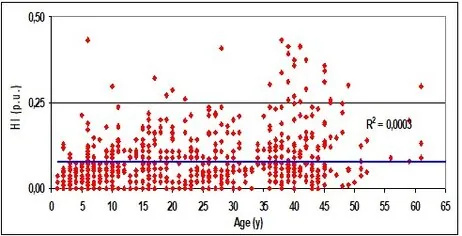
Our model is built on hundreds of thousands of historical data sets, extensive field experience in transformer diagnostics, and advanced data processing and engineering expertise.
How the index is calculated
- Main inputsChemical and physical data (DGA, water, furans, BDV, DDF, acidity, corrosive sulphur) and electrical data (leakage inductance, SFRA, FDS).
- AssessmentIndividual and global HI calculated by algorithms against specific thresholds and limits.
- AnalysisIdentification of faults and anomalies, and ranking of the fleet.
- ActionsMaintenance and operating proposals: change of test frequency, degassing, reclamation, passivation, further investigation, load limitation, shutdown or replacement.
Integrated in RM EYE
EWP's algorithms are fully integrated into the RM EYE platform, giving a central, intuitive view of the whole transformer fleet:
- Real-time monitoring of asset condition
- Automatic detection of anomalies
- Prioritised recommendations for corrective actions
- Support for predictive maintenance strategies
By combining advanced monitoring with proprietary analytics, we help you move from reactive to predictive asset management: higher reliability, better-planned maintenance and fewer unexpected failures, while getting the most performance and life out of every transformer.
Next servicePower Quality